
Ageing
Crepey Skin
Excessive sweating
Pigmentation
Eye smile lines
Sagging Jaw Line
Acne
Rosacea
Hair Loss
Weight Gain
Thin Lips
Home
Shop
Blog
About
Treatments
Get in Touch
Concerns
Book
Under eye shadows
Male Hair Loss
Ageing Hands
Stretch Marks
Cellulite
Neck Lines
Nose to mouth lines
Mouth to chin lines
Facial Asymmetry
Frown Lines
Menopausal Skin
How Many Sessions Does Rosacea Treatment Take? Setting Realistic Expectations
It is one of the first questions patients ask, and one of the most important ones to answer honestly. How many sessions will I need? How long until I see results? When will my skin actually change?
The honest answer is that it depends, and the variables matter. Rosacea is a chronic inflammatory condition with multiple contributing drivers. The number of sessions needed, the timeline for visible improvement and the long-term management approach all vary significantly depending on your rosacea subtype, how long you have had it, what treatments you have already tried, and which combination of interventions is appropriate for your skin.
This post explains realistic timelines for each treatment in the Face for Soul rosacea pathway, what to expect at each stage, and why understanding rosacea as a chronic condition rather than a short course of treatment is the key to managing it successfully long term.
Rosacea is not a condition you treat and discharge. It is a condition you learn to manage well, with the right foundation and the right plan.
Why Rosacea Treatment Takes Time
Most patients come to a rosacea consultation having tried things that did not work, or that worked briefly and then stopped. Understanding why this happens is important before setting expectations for any treatment plan.
Based on articles retrieved from PubMed, the REACH international dermatology group, whose 2025 longitudinal rosacea management paper is one of the most comprehensive guides to long-term rosacea care published to date, emphasised that rosacea is a chronic condition characterised by remissions and flares, and that successful management requires both an active treatment phase and a structured long-term maintenance approach. Clear and sensitive communication regarding achievable outcomes is identified as critical to patient adherence and success.
| RESEARCH | International Expert Consensus 2025 Exploring New Dimensions in Longitudinal Rosacea Management (REACH) Schaller M, Welsh B, Micali G, et al. Dermatol Ther (Heidelb). 2025;16(2):741-761. International expert group reviewing long-term rosacea management across all phenotypes. Key findings: rosacea requires both an active treatment phase and a structured maintenance phase. Patient empowerment through education on chronicity and realistic outcomes is essential. Being able to engage in their own long-term care of symptoms, signs and flares is critical for patients. Clear communication on achievable outcomes optimises therapeutic management. DOI: 10.1007/s13555-025-01612-x |
The second reason rosacea treatment takes time is biological. The changes that treatment creates, whether through PRF, radiofrequency microneedling or barrier repair, are not surface-level or immediate. They involve collagen remodelling, vascular reregulation, immune recalibration and barrier restoration. These are slow processes by definition. They improve progressively over weeks and months, not days.
| RESEARCH | Comprehensive Review Radiofrequency Microneedling: A Comprehensive and Critical Review Tan MG, Jo CE, Chapas A, Khetarpal S, Dover JS. Dermatol Surg. 2021;47(6):755-761. Reviewed 42 higher-quality studies of radiofrequency microneedling. Confirmed that radiofrequency microneedling-induced dermal remodelling and neocollagenesis are slow and progressive processes that continue to improve even six months after treatment. This characteristic makes it particularly valuable for chronic conditions like rosacea where sustained biological change is the goal. DOI: 10.1097/DSS.0000000000002972 |
The Two Phases of Rosacea Treatment
Understanding rosacea management as two distinct phases helps set realistic expectations from the start.
Phase One: The Active Treatment Phase
This is the period during which the most intensive treatment takes place. The goal is to reduce the inflammatory burden, begin barrier repair and achieve meaningful visible improvement. At Face for Soul, this phase is built progressively.
It begins with a thorough consultation to understand what is driving the rosacea, what has been tried before, and what the skin’s current status is. The treatment plan is then built from there, not from a standard protocol.
Phase Two: The Long-Term Maintenance Phase
Once meaningful improvement has been achieved, the maintenance phase begins. This is not a fixed endpoint. Rosacea is a chronic condition and the goal of the maintenance phase is to sustain the improvement, reduce the frequency and severity of flares, and adapt the plan as the skin and its circumstances change.
The expert consensus published in the International Journal of Dermatology in 2023 recommends that the maintenance phase should be considered for at least nine months after remission is achieved, with daily skincare and SPF as non-negotiable foundations throughout.
| RESEARCH | Expert Consensus 2023 Long-Term Maintenance Treatment of Rosacea: Experts’ Opinion Almeida LMC, Ianhez M, Dal’Forno T, et al. Int J Dermatol. 2023;63(1):94-101. Panel of seven board-certified dermatologists using Nominal Group Technique methodology. Recommended maintenance phase of at least nine months after achieving IGA 0 or 1 (clear or almost clear) during active treatment. Daily skincare regimen and sunscreen identified as crucial foundations. Active treatment phase reinitiated if signs or symptoms return or worsen. DOI: 10.1111/ijd.16920 |
Realistic Timelines: Treatment by Treatment
PRF: Foundation Sessions
PRF (Platelet Rich Fibrin) is where every rosacea treatment plan at Face for Soul begins. Sessions are typically spaced four to six weeks apart. Most patients begin with three to four sessions in the active treatment phase.
The timeline for visible change from PRF is gradual. After the first session, most patients notice that their skin is slightly calmer and less reactive over the following two to four weeks, though the change is subtle rather than dramatic. The improvement builds with each session. By the third session, most patients report meaningful reduction in flushing frequency, improved skin texture and reduced day-to-day reactivity.
PRF does not produce striking before-and-after photographs. What it produces is skin that is more stable, more resilient, and more responsive to everything that comes after it. That is the point of it.
SkinPen Microneedling: Where Appropriate
For patients for whom SkinPen microneedling is appropriate, it is typically introduced following PRF sessions, once the skin has established some baseline stability. Sessions are spaced four to six weeks apart. Three to four sessions is the usual course for rosacea, though this varies depending on individual response.
Visible improvement from microneedling in rosacea tends to be progressive. The inflammatory calming effect builds over the course of treatment and continues to improve in the weeks following each session as the skin’s healing response proceeds.
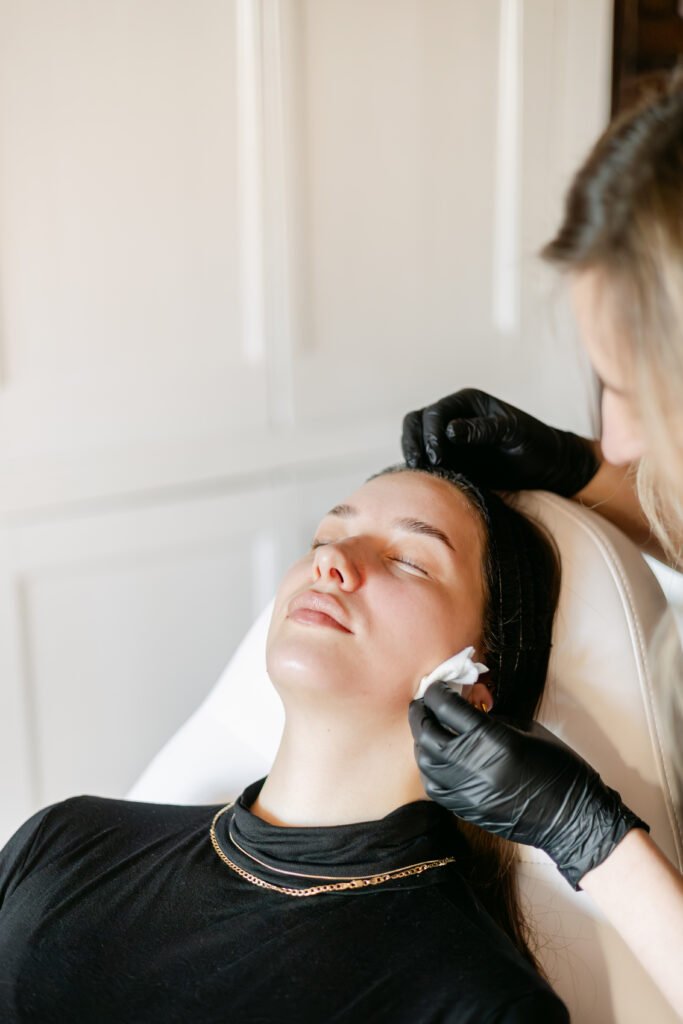
Morpheus8: Structural Change
Morpheus8 is introduced for suitable patients after the foundational PRF phase. Sessions are typically spaced six to eight weeks apart to allow the full depth of collagen remodelling and vascular change to progress between treatments.
Research published in Postepy Dermatologii i Alergologii found that fractional microneedling radiofrequency produced a 34.48% reduction in rosacea severity scores after eight weeks and an 82.75% reduction after sixteen weeks as a standalone treatment. These timelines, eight to sixteen weeks of active treatment, reflect the realistic window for meaningful clinical change from radiofrequency microneedling. [(DOI: 10.5114/ada.2024.142597)](https://doi.org/10.5114/ada.2024.142597)
Most patients at Face for Soul progress through two to three Morpheus8 sessions in the active treatment phase. The improvement is cumulative and continues to develop for months after each session, reflecting the progressive nature of collagen remodelling and vascular reregulation documented in the research.
A study of recalcitrant papulopustular rosacea published in the Journal of Cosmetic Dermatology found that three sessions of fractional microneedling radiofrequency at four-week intervals produced a 71% reduction in papules and pustules and a 54% reduction in erythema index at the sixteen-week follow-up. [(DOI: 10.1111/jocd.12982)](https://doi.org/10.1111/jocd.12982) These were patients who had failed all previous first-line therapies, which makes the results particularly significant for patients who have already tried multiple things without lasting improvement.
| Wondering where your skin is in the treatment journey? A consultation at Face for Soul will map out a realistic treatment plan and timeline based on your specific rosacea, not a standard protocol. Book a Rosacea Consultation Read About the Full Rosacea Treatment Pathway |
[ BUTTON 1: Link to /consultation | BUTTON 2: Link to /rosacea-treatment-burford-oxfordshire ]
Polynucleotides: Repair and Support
Polynucleotides can be used alongside PRF or as a standalone treatment depending on the skin’s needs. Sessions are typically spaced four to six weeks apart, with two to four sessions in the active phase for most rosacea patients. The cellular repair and barrier restoration they provide is progressive and continues to develop between sessions.
Prescription Skincare: Daily and Ongoing
Prescription skincare, including azelaic acid where appropriate, begins at the same time as treatment and continues throughout both the active and maintenance phases. It is not a short course. It is a daily foundation that supports every other intervention and helps sustain results between and after clinic treatments.
Visible improvement from prescription azelaic acid in rosacea typically begins within four to eight weeks of consistent daily use and continues to improve with ongoing use. It does not stop working if treatment is maintained correctly.
What Influences the Timeline
Several factors meaningfully affect how quickly a patient responds to rosacea treatment and how many sessions are needed.
- Rosacea severity and duration: mild rosacea of recent onset typically responds faster than severe rosacea of many years’ standing with significant barrier damage
- Previous treatments: patients who have had multiple unsuccessful or aggravating previous treatments may need more foundational work before active treatment produces visible improvement
- Trigger load: patients with high trigger exposure, particularly unprotected UV, alcohol, heat or stress, will see slower and less durable improvement than those who actively reduce their triggers
- Skincare consistency: patients who maintain their daily prescription or clinical skincare consistently sustain results better and between sessions more effectively
- Hormonal factors: patients in perimenopause or menopause may experience more variable responses, as hormonal fluctuation affects the inflammatory and vascular drivers of rosacea
- Overall skin health: the condition of the skin barrier, immune status and general health all influence how readily the skin responds to regenerative and energy-based treatments
The Psychological Dimension
It is worth acknowledging directly that rosacea is not just a skin condition. A cross-sectional study published in Frontiers in Psychiatry found a prevalence of anxiety of 53.9% and depression of 58.1% in a cohort of 774 rosacea patients. Younger patients with more severe self-reported symptoms and higher disease burden were particularly affected. [(DOI: 10.3389/fpsyt.2021.659171)](https://doi.org/10.3389/fpsyt.2021.659171)
This matters in the context of treatment timelines because rosacea patients often arrive at consultations having already invested significant emotional energy in treatments that did not work. Managing expectations honestly and compassionately, while also providing a genuinely effective plan, is part of what a good rosacea consultation achieves. The goal is not to promise rapid results. It is to provide a pathway that produces meaningful, lasting improvement for people who have often been let down by shorter, less considered approaches.
What the Maintenance Phase Looks Like at Face for Soul
Once meaningful improvement has been achieved through the active treatment phase, the plan transitions to maintenance. For most patients this involves a maintenance PRF or Morpheus8 session every four to six months, continued daily prescription or clinical skincare, consistent mineral SPF, and an annual or biannual consultation to review the plan and adapt it as needed.
Rosacea does not stay the same. It changes with age, hormonal shifts, lifestyle changes and cumulative trigger exposure. The maintenance plan needs to be reviewed and adapted over time, not set once and forgotten.
Rosacea Treatment in Burford and Across the Cotswolds
Face for Soul is based at Castles Yard in Burford, Oxfordshire. The full rosacea treatment pathway, including PRF, Morpheus8, polynucleotides, SkinPen microneedling and prescription skincare, is available for suitable patients. Patients travel from Witney, Chipping Norton, Carterton, Oxford, Cheltenham, Cirencester and across the wider Cotswolds and Oxfordshire.
If you have been managing rosacea for years without a structured treatment plan, or if you have tried individual treatments without lasting improvement, a consultation will map out a realistic pathway and timeline for your specific skin.
| Ready to start a rosacea treatment plan with a realistic timeline? Book a consultation with Vaiva at Face for Soul in Burford or Chipping Norton. No GP referral needed. Prescription options available. Book Your Rosacea Consultation Shop Rosacea Skincare |
References
1. Schaller M, Welsh B, Micali G, et al. Exploring new dimensions in longitudinal rosacea management. Dermatol Ther (Heidelb). 2025;16(2):741-761. https://doi.org/10.1007/s13555-025-01612-x
2. Almeida LMC, Ianhez M, Dal’Forno T, et al. Long-term maintenance treatment of rosacea: experts’ opinion. Int J Dermatol. 2023;63(1):94-101. https://doi.org/10.1111/ijd.16920
3. Tan MG, Jo CE, Chapas A, Khetarpal S, Dover JS. Radiofrequency microneedling: a comprehensive and critical review. Dermatol Surg. 2021;47(6):755-761. https://doi.org/10.1097/DSS.0000000000002972
4. Hasan AI, Ali KA, Latif TM. A comparative study between fractional microneedling radiofrequency with systemic isotretinoin and fractional microneedling alone in the treatment of rosacea. Postepy Dermatol Alergol. 2024;41(5):495-499. https://doi.org/10.5114/ada.2024.142597
5. Kwon HH, Jung JY, Lee WY, Bae Y, Park GH. Combined treatment of recalcitrant papulopustular rosacea involving pulsed dye laser and fractional microneedling radiofrequency with low-dose isotretinoin. J Cosmet Dermatol. 2019;19(1):105-111. https://doi.org/10.1111/jocd.12982
6. Chen M, Deng Z, Huang Y, Li J. Prevalence and risk factors of anxiety and depression in rosacea patients: a cross-sectional study in China. Front Psychiatry. 2021;12:659171. https://doi.org/10.3389/fpsyt.2021.659171
All clinical citations retrieved from PubMed (pubmed.ncbi.nlm.nih.gov). Evidence retrieved June/July 2025.
Frequently Asked Questions
Q: How many sessions does rosacea treatment take?
This depends on your rosacea subtype, severity, treatment history and which combination of treatments is appropriate for your skin. Most patients at Face for Soul progress through three to four PRF sessions in the initial phase, followed by two to three Morpheus8 sessions if appropriate, with sessions spaced four to eight weeks apart depending on the treatment. Clinical research shows meaningful improvement at eight weeks and substantial improvement at sixteen weeks for radiofrequency microneedling. Total active treatment for most patients spans three to six months.
Q: How long does it take to see results from rosacea treatment?
Timeline varies by treatment. PRF produces gradual calming over two to four weeks per session, with improvement building across a course. Prescription skincare including azelaic acid typically shows visible improvement within four to eight weeks of consistent use. Morpheus8 results continue to develop for months after each session as collagen remodelling proceeds. Most patients see meaningful overall improvement in redness, flushing and skin resilience over three to six months of structured treatment.
Q: Is rosacea treatment a one-off course or ongoing?
Rosacea is a chronic condition and treatment is ongoing, though the intensity changes over time. An active treatment phase achieves meaningful improvement. A maintenance phase, typically involving sessions every four to six months alongside daily prescription skincare and SPF, sustains those results. International expert consensus recommends considering maintenance treatment for at least nine months after achieving remission, with active treatment reinitiated if symptoms return.
Q: Can rosacea be cured in a set number of sessions?
No. Rosacea is a chronic inflammatory condition and there is no fixed course of treatment that cures it. What is achievable is very well-managed rosacea, with significantly reduced redness, flushing and reactivity, maintained through a combination of active treatment sessions and a daily skincare and SPF foundation. Many patients achieve a level of management where rosacea has minimal impact on daily life.
Q: Will I need Morpheus8 sessions forever?
No. After the active treatment phase, most patients transition to maintenance sessions every four to six months. Some patients with well-managed rosacea may space these further apart over time. The frequency is determined by how the skin is responding and what is needed to sustain the improvement, not by a fixed schedule. Prescription skincare and daily SPF continue throughout.
Q: What happens if I stop treatment?
Rosacea is a chronic condition and its drivers, including vascular dysregulation, immune hypersensitivity and barrier dysfunction, remain active. If treatment stops entirely, including daily skincare and SPF, the condition will gradually return to its previous state. The goal of the maintenance phase is to sustain improvement with a lighter ongoing commitment rather than the intensity of the active treatment phase.
